
Helping Children Discover Creativity Through Great Art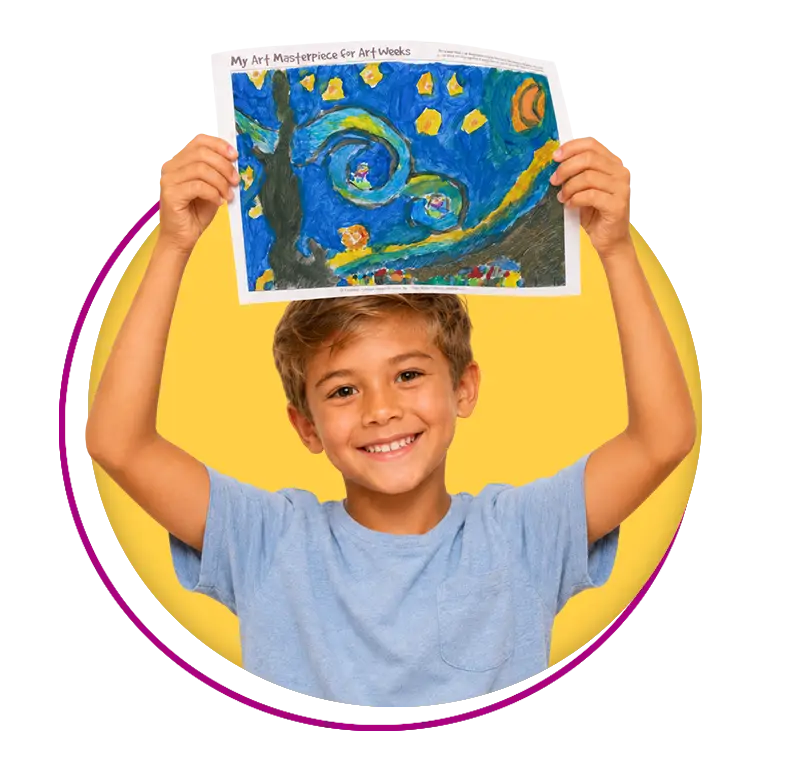
ArtWeeks
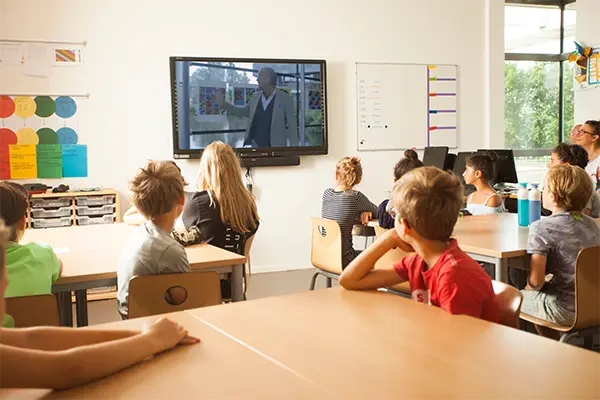
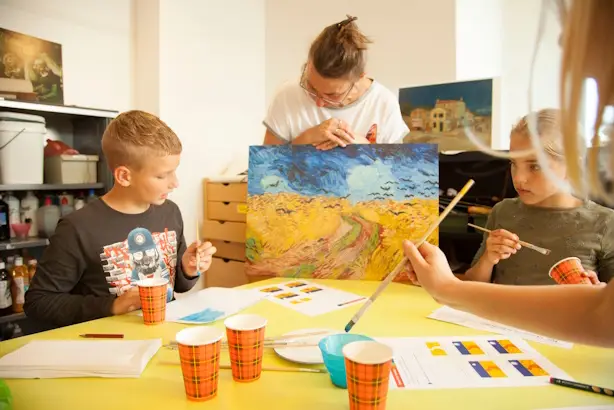
ArtWeeks is an elementary school-wide art education program inspired by 16 world-famous artists. Through stories, images and creative projects, students discover how artists think, experiment and create—while developing their own artistic confidence along the way.
Watch video
Sign up now
More Than an Art Lesson
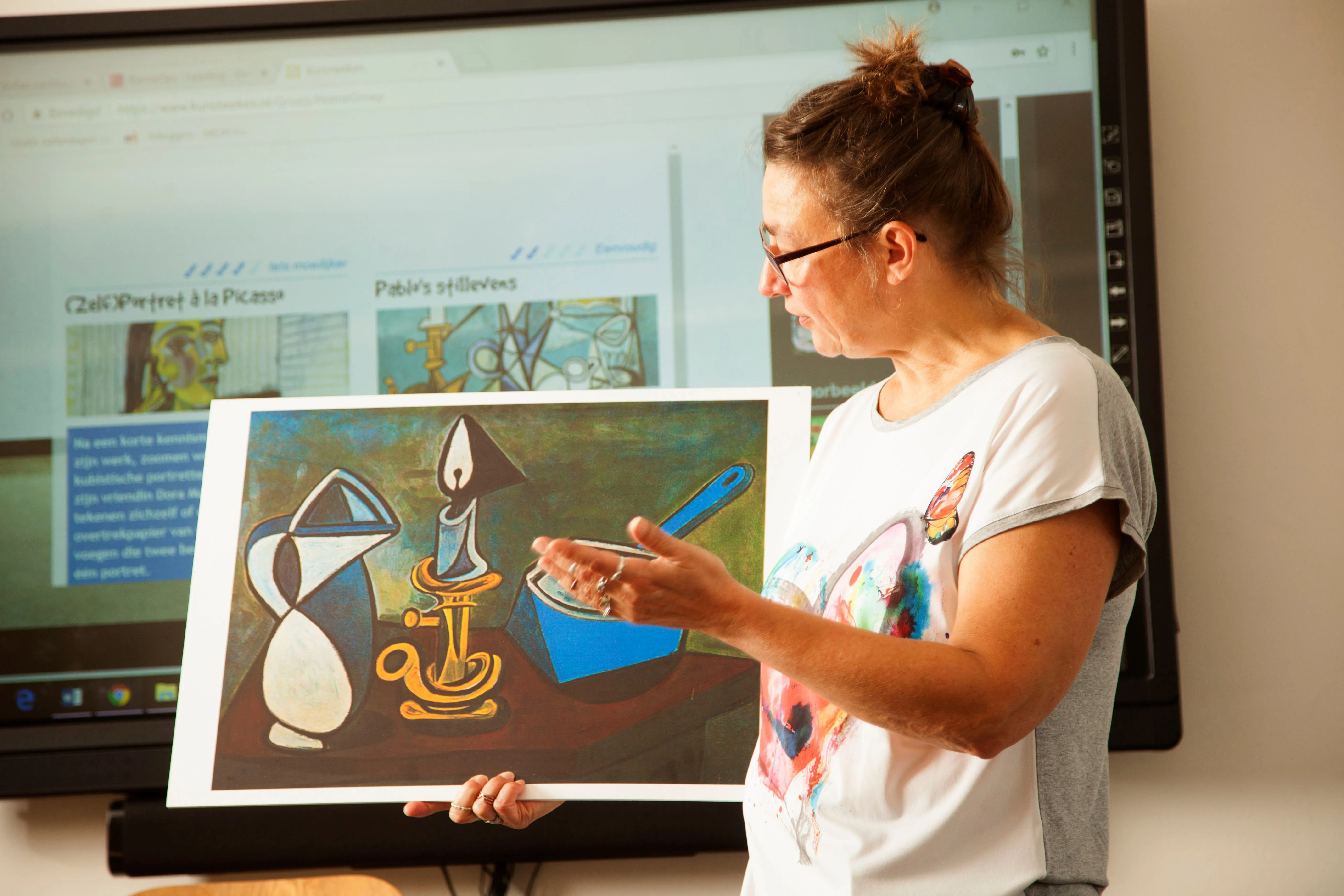
Art education helps children develop creativity, confidence and critical thinking—skills that support learning far beyond the art classroom.
ArtWeeks brings these benefits to life through artist-inspired projects that encourage students to observe, experiment, discuss and create.
Artists Who Inspire
Artists see the world in unique ways—and there is much to learn from that.
Through the lives and work of 16 carefully selected artists, students discover new ways of thinking, creating and expressing themselves. Each artist has been chosen to match the interests, abilities and developmental stage of a specific age group.
4 - 6 YEARS: Associative and Abstract
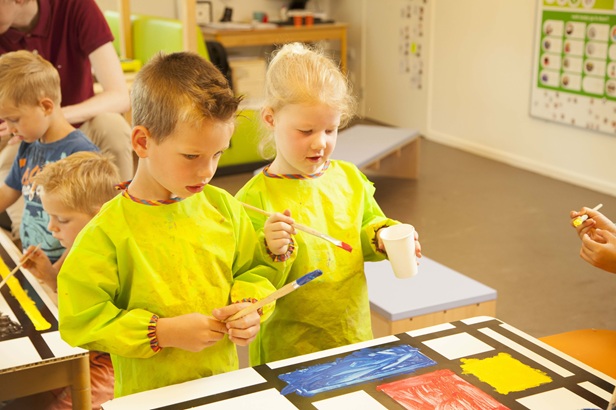
Young children naturally find stories, characters and meaning in abstract shapes and colours. Inspired by Mondrian, Kandinsky, Kusama and Thomas, they explore colour, pattern, shape and imagination while discovering that there is no single right way to create art.
Meet the Artists
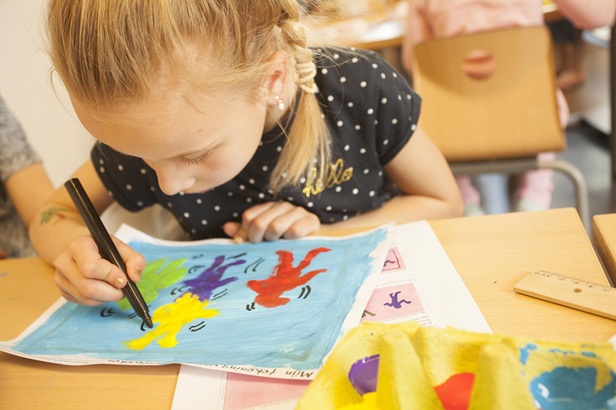
6 - 8 YEARS: Curious and Expressive
Children become increasingly interested in recognizable shapes, symbols and stories. Inspired by Haring, Warhol, Klee and O'Keeffe, they explore colour, shape and visual storytelling while developing their own creative voice.
Meet the Artists
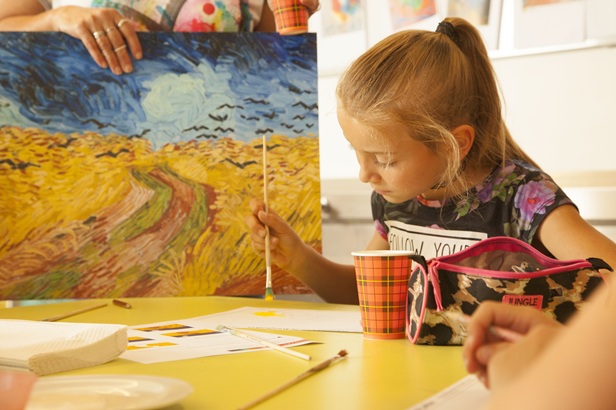
8 - 10 YEARS: Developing Skills & Confidence
Children begin to pay more attention to technique and detail. Inspired by Van Gogh, Miró, Appel and Lichtenstein, they experiment with artistic styles while building confidence in their own creative abilities.
Meet the Artists
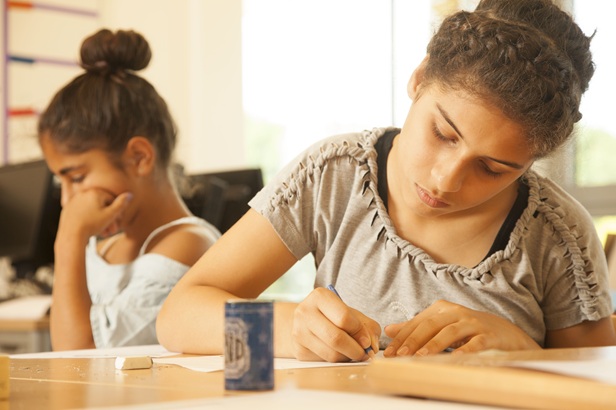
10 - 12 YEARS: Finding Their Own Voice
As students grow older, they become increasingly interested in expressing their own ideas and opinions. Inspired by Kahlo, Dalí, Matisse and Picasso, they discover how art can be used to communicate personality, imagination and perspective.
Meet the Artists
The Class Portal
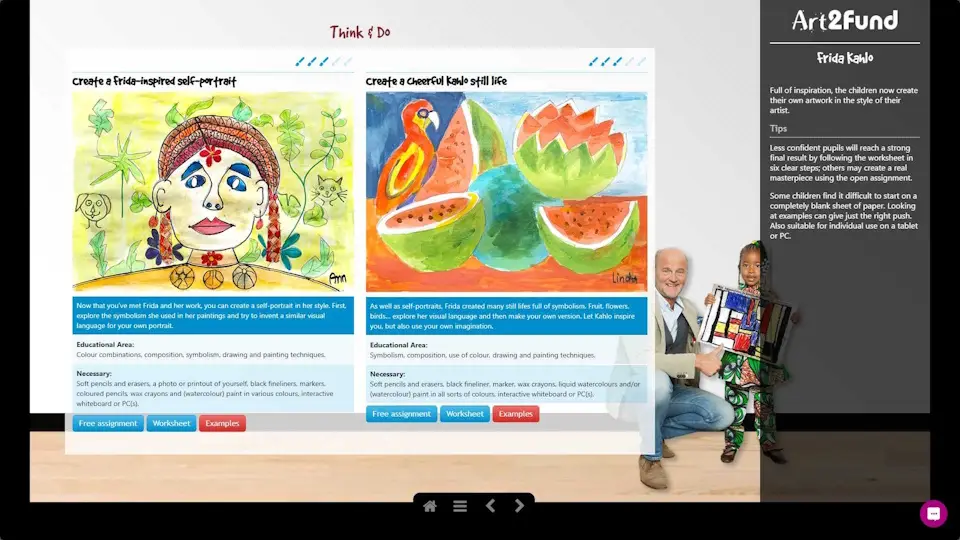
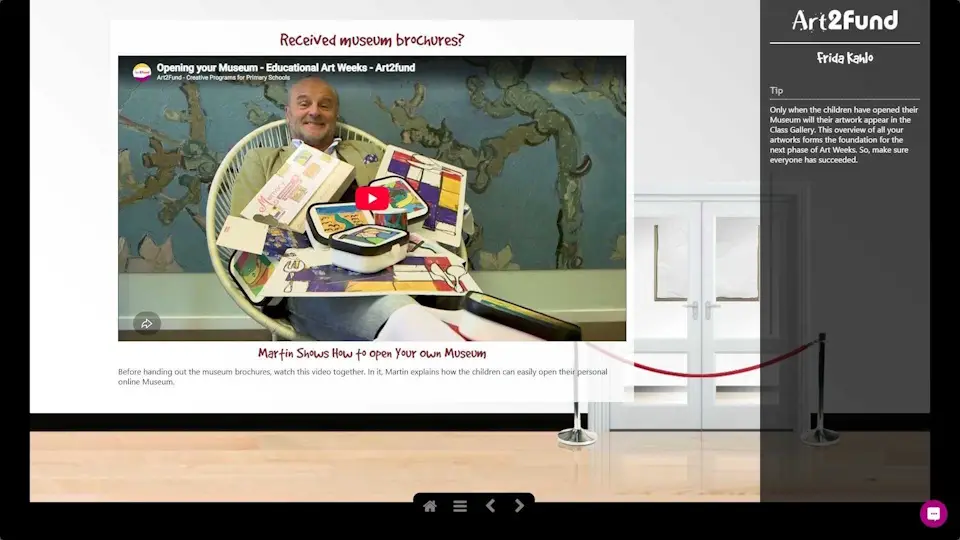
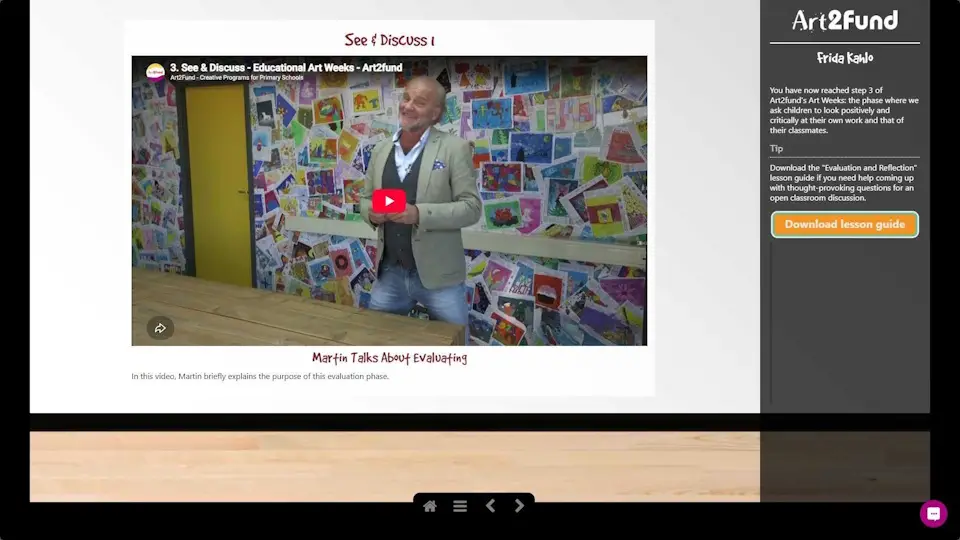
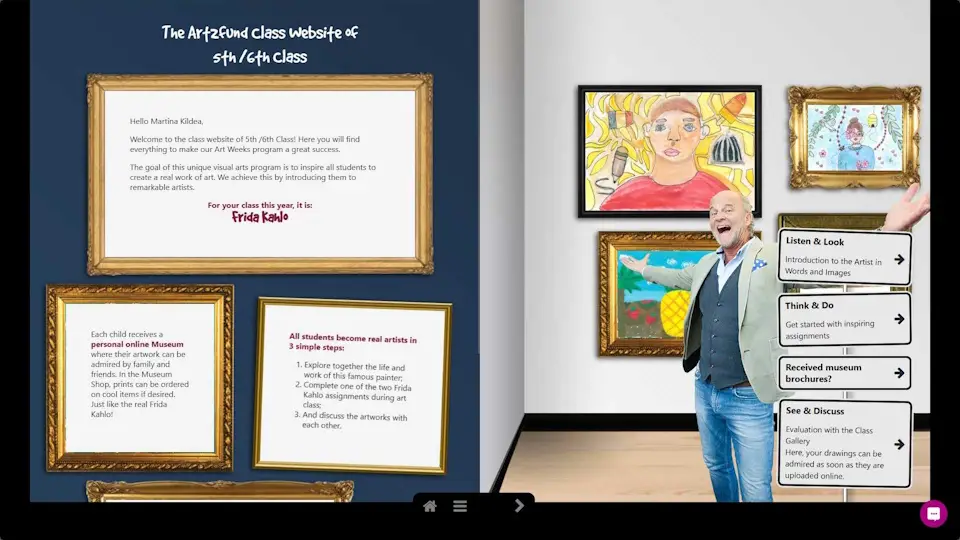
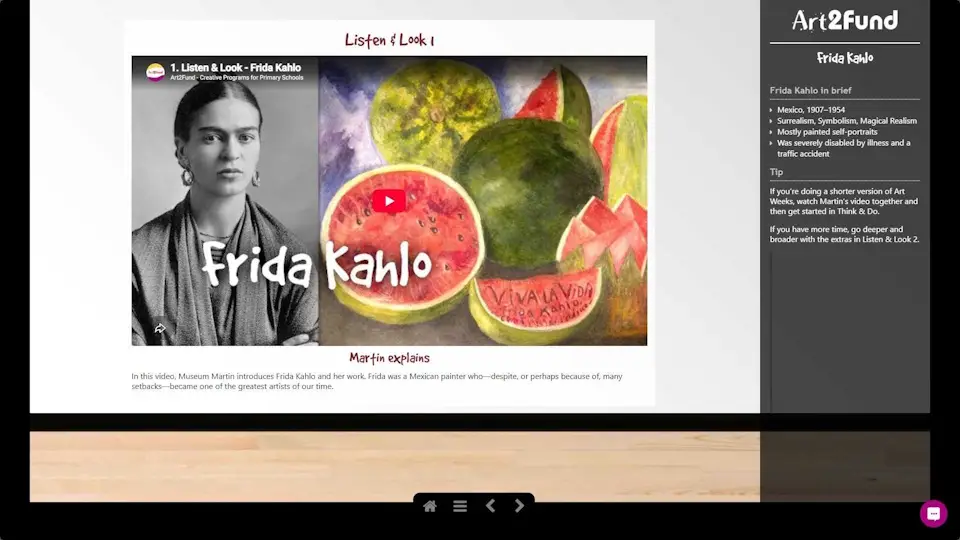
Every participating teacher receives access to a dedicated Class Portal built around their ArtWeeks artist.
The Class Portal gives teachers instant access to all lessons, videos, assignments and classroom resources connected to their ArtWeeks artist.
Visit class portal
prev
next
How it Works: Lesson Structure
ArtWeeks follows a simple three-step structure that supports creativity while giving teachers the guidance they need.
1. Listen & Look:
Discover an artist and their work
Students discover the artist through stories, videos and visual exploration.
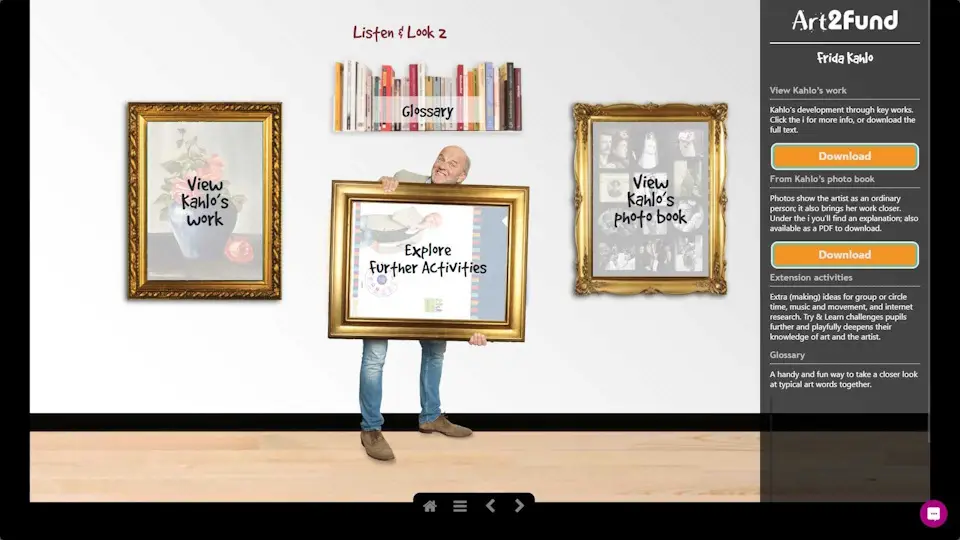
- Video introduction about the artist
- Highlights from the artist's most important works
- Photo album about the artist's life
- Explanation of difficult concepts
- Tips for further study
2. Think & Create:
Inspired by the master’s style
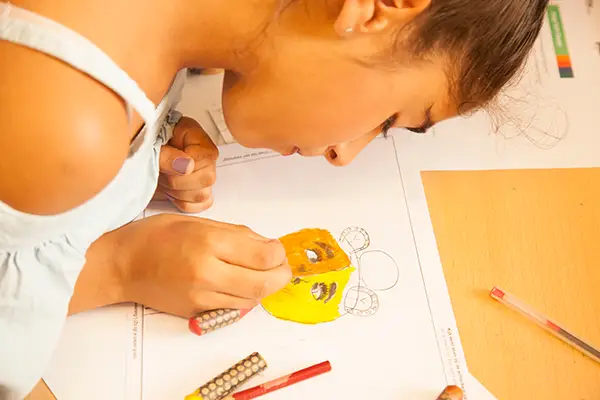
Students create their own artwork inspired by the artist's style and ideas.
- Choice of two fully elaborated creative assignments
- Step-by-step instructions in word and image
- As a free assignment or with a worksheet
3. Reflect & Discuss:
Positive critical look at the end result
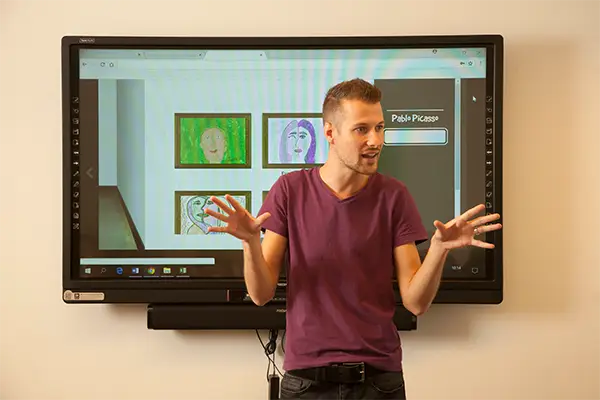
Students share their artwork, talk about their creative choices and learn to appreciate different approaches and ideas.
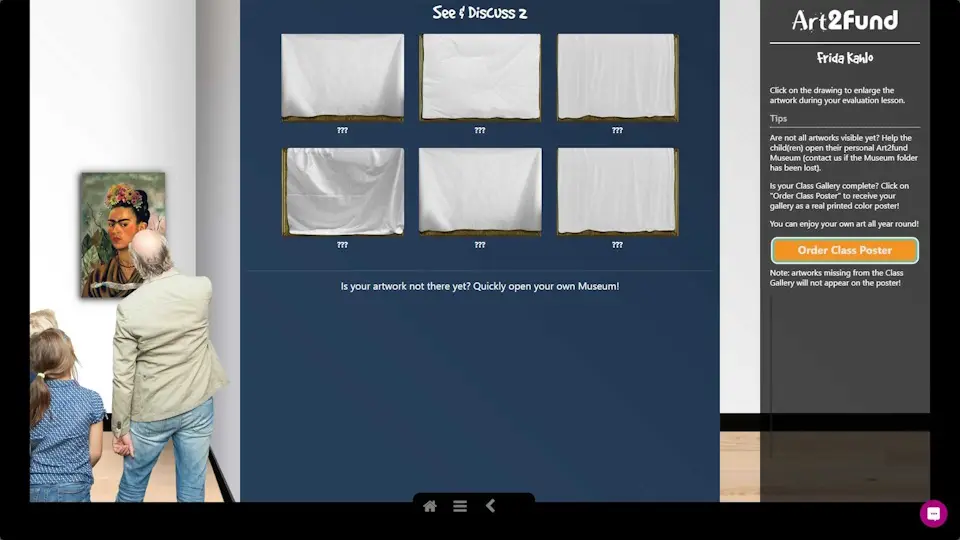
Using the Class Gallery, teachers can easily display and discuss the artworks created by the class, creating a positive and supportive reflection moment.
Using the Class Gallery, teachers can easily display and discuss the artworks created by the class, creating a positive and supportive reflection moment.
- Short instruction video
- Lesson plan provides guidance for the teacher if desired
Every Child Gets Their Own Online Museum
Children's artwork deserves to be celebrated. That's why every participating student receives a personal online museum where their artwork is professionally displayed.
Family and friends can visit the museum, admire the artwork, and gain a unique insight into the school's creative learning experience.
Visit online Museum
A Museum Experience to Remember
The personal online museum also includes a museum shop where family and friends can order personalized keepsakes featuring the child's artwork.
After all, every great museum has a museum shop. Just as visitors can take home a Van Gogh on a mug or a poster, families can enjoy personalized products featuring the artwork of their own young artist.
Creativity That Gives Back
Schools can choose whether purchases made through the keepsake shop include a fundraising contribution.
Whether you are supporting a school project, educational initiative or charitable cause, the choice is entirely yours.
More information
Completely Free for Schools
ArtWeeks is provided at no cost to participating schools.
Families who choose to purchase keepsakes through the museum shop make it possible for us to offer the program free of charge.
No participation fees.
No setup costs.
No fundraising obligation.

For Schools
- Complete art program
- Online school gallery
- Optional fundraising

For Teachers
- Ready-to-teach lessons
- Dedicated Class Portal
- Minimal preparation

For Students
- Personal online museum
- Creative confidence
- Artist-inspired projects

For Families
- View student artwork online
- Personalized keepsakes
- Stronger school connection
Ready to Start your ArtWeeks?
Sign up now
Want to Know More?
Discover the many benefits of our programs.
Fill out the form and receive a comprehensive information guide with everything you need to know.